

Categories
Allgemein

Germany: GandCrab Ransomware Extortionist Convicted

A state theatre in southern Germany, an internationally operating ransomware ring and a criminal trial in which courts suddenly have to dissect covert ransom negotiations, darknet chats and opaque payment flows – it all sounds more like a screenplay than a day in a regional courtroom.

What makes this case so compelling is that it forces a public institution to explain, under oath, how it managed to stay operational under acute digital extortion, and it exposes the practical roles that specialised cybercrime prosecutors, external IT contractors and potential ransom payments actually play. In doing so, the proceedings open a rare window onto a market that normally operates in the shadows and turn into a case study of how tightly technical, legal and political questions are intertwined whenever ransomware hits.
Categories
Cybercrime

Shutdown of Cryptomixer.io

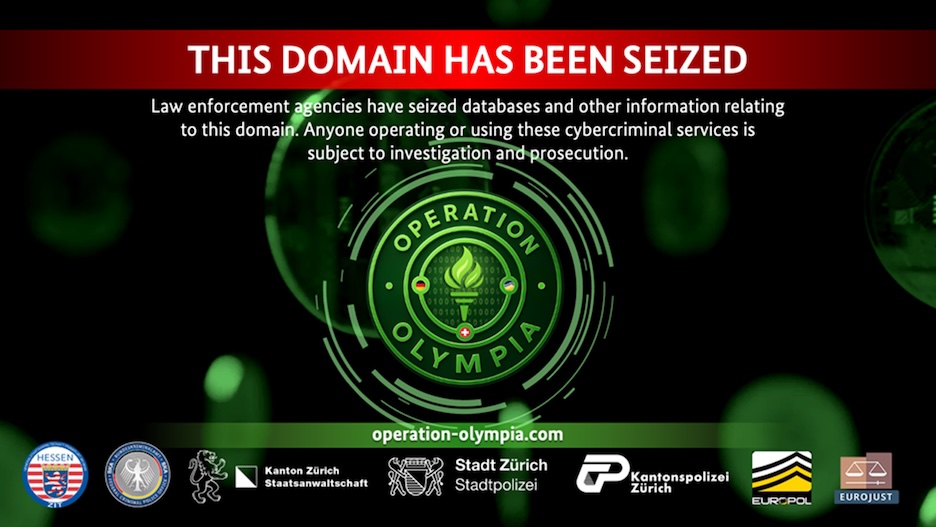
From November 24 to 28, 2025, German and Swiss law enforcement authorities, supported by Europol and Eurojust, conducted a large-scale operation against the cryptocurrency mixing service Cryptomixer.io. Three servers in Switzerland were seized, the domain was blocked, and cryptocurrencies worth approximately 25 million euros were confiscated. Additionally, more than 12 terabytes of data were secured by investigators. Since its launch in 2016, Cryptomixer.io had been one of the largest Bitcoin mixers, anonymizing transactions by pooling coins from various users and redistributing them in smaller amounts to new addresses. This method disrupts the transaction chain and complicates traceability—a service primarily used in the underground economy and for obfuscating illicit financial flows.

The platform was accessible both on the clear web and the darknet, processing billions in transactions, many of which were linked to illegal activities such as ransomware attacks, drug and arms trafficking, or fraud. After the seizure, authorities placed a notice on the website warning that anyone using the service could face investigation. Whether this warning applies universally or requires nuanced consideration is a key question for those affected.

Categories
Cybercrime Cybersecurity

Cyber pirates: Does the US want to legalize malicious hackers?

Return of letters of marque: The US may be on the verge of taking an unprecedented step in the fight against cybercrime: With the Scam Farms Marque and Reprisal Authorization Act of 2025, Congress wants to revive a centuries-old instrument – letters of marque and reprisal, also known as letters of marque. Historically, these allowed private ship owners to capture enemy merchant fleets on behalf of their country.

Now, cyber pirates are to be given similar rights to combat foreign hackers, fraud networks, and state-sponsored cybercriminals. But what at first glance appears to be an innovative solution turns out, on closer inspection, to be a highly controversial undertaking that raises profound legal, ethical, and strategic questions.

Categories
Criminal Defense Cybercrime

Cybercrime criminal defense in Germany: Cybercrime investigations in transition

The way digital investigators work in Germany and Europe today has changed fundamentally—something that not all stakeholders have noticed yet. As a criminal defense attorney, I have been observing how things are changing in my own cybercrime cases for years—in addition to the wealth of information I receive from my network of clients and colleagues. And I can only say: it’s time to wake up. German investigators in particular are extremely persistent and know how to make the most of international instruments. Above all, the special public prosecutor’s offices in Cologne, Frankfurt, and Bamberg must be kept on the international radar.

Categories
Criminal Defense

Transnational Fraud and German Criminal Law

The Hamm Higher Regional Court on Territorial Jurisdiction and Organisational Offences: In its decision of 14 May 2025 (Case No. 1 Ws 90/25), the Higher Regional Court (OLG) of Hamm addressed the applicability of German criminal law in cases where part of a fraudulent offence has been committed abroad, provided that the result of the offence occurs (even partially) within Germany. The case concerned a large-scale, cross-border fraud scheme involving so-called “training packages” which, in reality, served to promote a non-existent cryptocurrency. The ruling is particularly notable in its doctrinal approach, as the court invoked the concept of an “improper organisational offence” to qualify the entirety of the conduct as a single criminal act under German law.

Categories
Criminal Defense Technology- & IT-Law

Polymarket: When Betting Becomes World Interpretation

At first glance, the blockchain-based betting platform Polymarket might appear to be just another technical curiosity from the world of cryptocurrencies. But a closer look reveals a profound social phenomenon: the gamification of political and societal reality. If you want to know what people believe is likely to happen—and are willing to back up with real money—you’ll find Polymarket to be a fascinating, if deeply ambivalent, arena.

Categories
Criminal Defense Technology- & IT-Law

Cryptocurrencies as Taxable Assets in germany

FG Nürnberg Confirms Taxability Despite Virtual Execution: In its judgment of January 22, 2025 (Case No. 3 K 760/22), the Fiscal Court (Finanzgericht, FG) of Nuremberg issued a landmark ruling on the taxation of gains from cryptocurrency transactions. The court not only confirmed the general tax liability of such private sales under § 23(1) sentence 1 no. 2 of the German Income Tax Act (EStG), but also addressed in detail a range of arguments raised by the taxpayer—concerning the lack of economic substance of tokens, the purely virtual nature of transactions, and alleged enforcement deficiencies by tax authorities.

Categories
Cybercrime Cybersecurity

Cybercrime in North Korea and the threat to the cryptocurrency industry

North Korea is one of the main perpetrators of the growing threat to cyber security. At least since the attack on Sony Pictures in 2014, the country has been perceived as a major cyber player on the international stage. Since then, Pyongyang has used its hacking skills to circumvent international sanctions and steal funds.

Pyongyang was able to use the captured funds to finance the development of its nuclear and missile program. North Korea also uses cyber operations for (digital) espionage. The targets are wide-ranging: they are directed against universities, human rights organizations and media companies, create discontent or distrust through election fraud and attack critical national infrastructures. The increasing importance of North Korea in the area of cybercrime and cybersecurity is also the reason why we maintain a separate blog post on the topic here.

As an example, a study by Recorded Future’s Insikt Group paints an alarming picture of North Korean cybercrime. These activities, which have increased since 2017, target the cryptocurrency industry and have enabled North Korea to steal an estimated 3 billion dollars in cryptocurrencies.

Categories
Criminal Defense

Dubai Unlocked: The dark side of the glittering real estate world

The latest expose called “Dubai Unlocked” provides insights into the underbelly of Dubai’s luxury real estate market. This comprehensive investigation uncovers how individuals from the international elite, including criminals, politicians and sanctioned individuals, invest in the desert metropolis’ real estate business. Through leaked data, the Organized Crime and Corruption Reporting Project (OCCRP), in collaboration with 74 media partners worldwide, was able to conduct a detailed analysis of ownership structures in Dubai and bring questionable transactions to light.

Categories
Technology- & IT-Law

3D Printing on the Moon: Opportunities, Risks, and the Threat of Cyberattacks

The vision of using 3D printers on the Moon has gained significant momentum in recent years. What seemed like a chapter from a science fiction novel not long ago is now coming within reach. Advances in additive manufacturing and successful tests of this technology in space reveal the immense potential that 3D printing holds for space exploration. However, where there are opportunities, there are also threats—especially in the realm of cybersecurity. Protecting sensitive print data and ensuring the integrity of the printing processes are crucial to realizing the vision of an autonomous Moon base supported by 3D printing.