
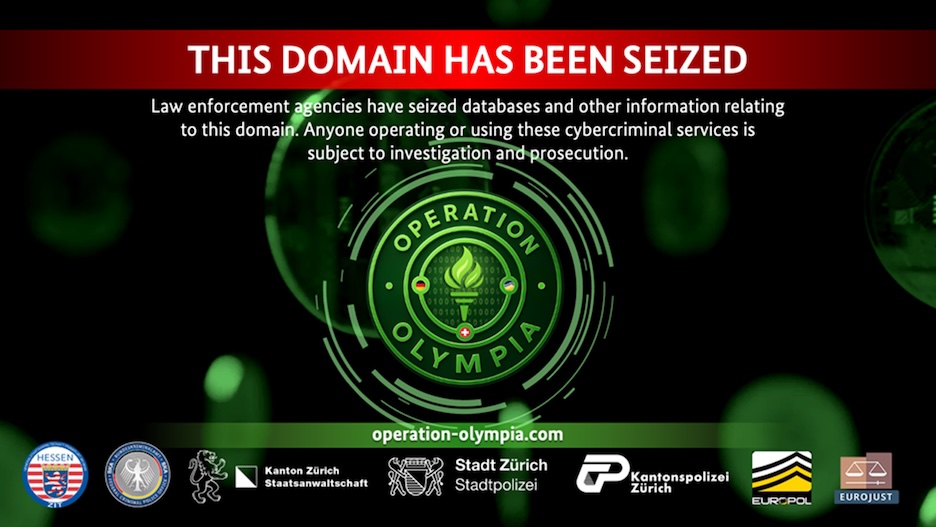
From November 24 to 28, 2025, German and Swiss law enforcement authorities, supported by Europol and Eurojust, conducted a large-scale operation against the cryptocurrency mixing service Cryptomixer.io. Three servers in Switzerland were seized, the domain was blocked, and cryptocurrencies worth approximately 25 million euros were confiscated. Additionally, more than 12 terabytes of data were secured by investigators. Since its launch in 2016, Cryptomixer.io had been one of the largest Bitcoin mixers, anonymizing transactions by pooling coins from various users and redistributing them in smaller amounts to new addresses. This method disrupts the transaction chain and complicates traceability—a service primarily used in the underground economy and for obfuscating illicit financial flows.
The platform was accessible both on the clear web and the darknet, processing billions in transactions, many of which were linked to illegal activities such as ransomware attacks, drug and arms trafficking, or fraud. After the seizure, authorities placed a notice on the website warning that anyone using the service could face investigation. Whether this warning applies universally or requires nuanced consideration is a key question for those affected.
Data Seizure and Potential User Identification
The confiscation of extensive datasets raises the question of whether users of the service can be identified. Investigators secured not only servers but also email accounts and evidence from file-hosting services. This data could theoretically be used to trace users through transaction analysis, IP addresses, or other digital footprints. However, merely using a mixing service does not automatically imply criminal suspicion.
Legally, the critical distinction lies in whether the user intentionally facilitated criminal activities such as money laundering. So-called “self-laundering”—the mixing of one’s own legally acquired funds—is generally not punishable under German law. Those who used the service out of privacy concerns or curiosity, without criminal intent, may not have committed an offense.
Money Laundering vs. Legal Use
The boundary between criminal money laundering and legal use is complex. Under § 261 of the German Criminal Code (StGB), money laundering requires the deliberate concealment of assets derived from criminal activity. Users who sent their own legally obtained cryptocurrencies through a mixer to preserve privacy do not necessarily engage in criminal behavior. Prosecutors will need to examine each case individually to determine whether there is concrete evidence of criminal intent.
In practice, not every user of such a service is under general suspicion. The defense will need to assess whether the prosecution can prove that the assets in question originated from a crime. Without such proof, a conviction for money laundering will be difficult to secure.
For users, the frequency and volume of transactions, as well as any connections to known criminal platforms or actors, will be decisive. Occasional or small-scale use without further criminal context may not warrant prosecution.

Strategic Considerations for Affected Individuals
Users of Cryptomixer.io who may now face investigations should seek legal counsel promptly. A thorough review of the allegations and personal usage history is essential. It is also important to note that the seizure of data does not inevitably lead to charges. Authorities face the challenge of extracting admissible evidence from the secured data – a process that is not guaranteed to succeed in every case. Those who used the service sporadically or out of ignorance should not assume they will be convicted without further examination.
At the same time, this case once again demonstrates the investigators’ new approach, which they themselves refer to as “disruptive law enforcement”: they are making effective use of their success to position themselves communicatively, this time again with a video. However, the legal basis for this approach is highly questionable, as it primarily serves as a method of creating general communicative uncertainty.
Conclusion
The shutdown of Cryptomixer.io represents another step in the fight against cybercrime infrastructure. However, not every user of a mixing service is a criminal. Legal evaluation depends on individual circumstances, and the defense has significant room to challenge allegations. Anyone uncertain about the legal consequences of their use of the service should seek professional legal advice to protect their rights.
This case underscores the importance of a differentiated approach in digital law enforcement—and that technically feasible investigations do not automatically translate into legally sound accusations. For those affected, the advice is clear: stay calm, preserve documentation, and consult an attorney to safeguard your rights.

Availability: By email, callback, Threema or Whatsapp. Information about our fees.
Our law firm specializes in criminal defense, cybercrime, commercial criminal law including criminal tax law as well as IT law and manager liability. We only take on criminal defense cases for consumers—we are based in the Aachen area and operate nationwide.